Stops cross-contamination
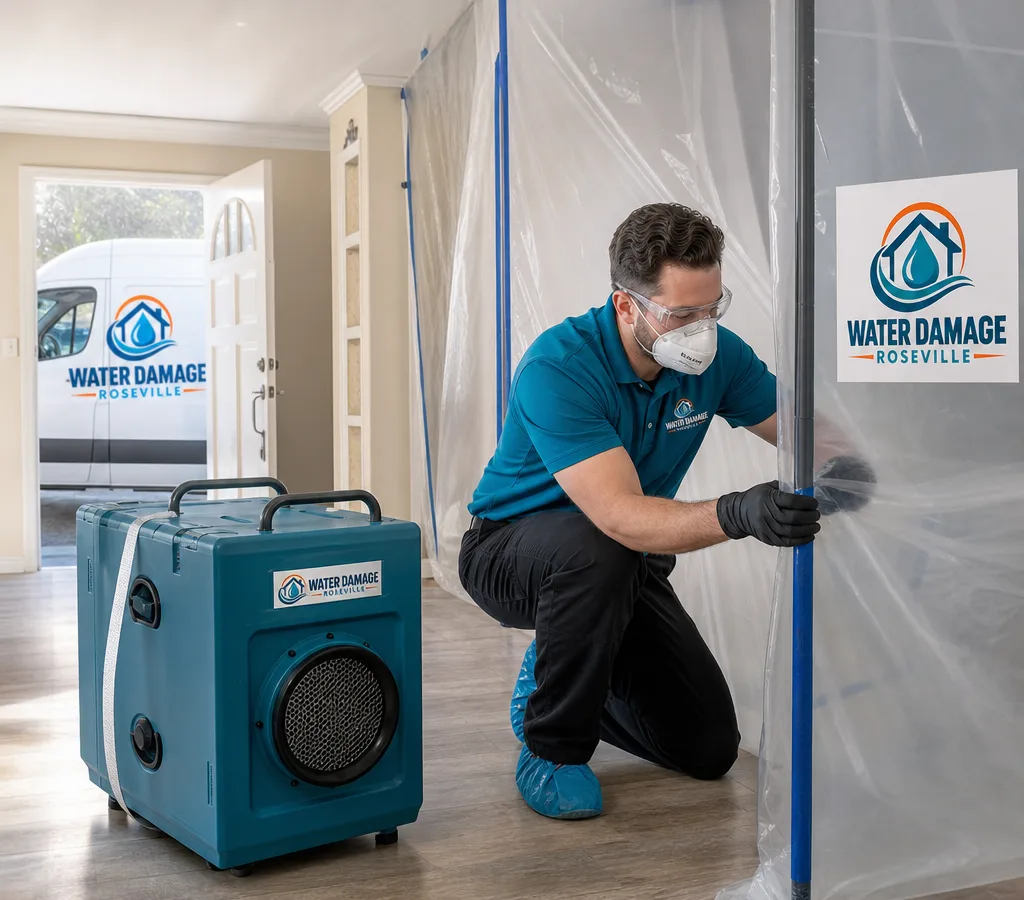
Containment keeps disturbed spores and dust from drifting into bedrooms, closets, and HVAC returns while materials are being removed.
Serving Roseville, California & surrounding areas
24/7 Emergency Response
Mold remediation in Roseville
If you smell a musty odor, see staining, or had a recent leak, get an inspection and a clear remediation plan that protects the rest of your home. Our team uses proper containment, HEPA filtration, and detailed cleanup so the problem is addressed at the source, not covered up.
Searching for mold removal Roseville CA usually means something already tipped you off: a lingering odor after a plumbing leak, bubbling paint near a bathroom, or dark growth around a window. Mold often follows moisture that gets trapped in wall cavities, under flooring, in attics, or behind cabinets, so what you can see is not always the full story.
In Roseville, the most common triggers we run into are past water intrusions—supply line leaks, tub and shower failures, dishwasher leaks, and roof or window seepage—and areas that stay damp or poorly ventilated. Older homes near Old Roseville can have multiple remodel layers that hide previous moisture, while newer construction around West Roseville may have tight building envelopes where a small leak can stay humid longer if it is sealed behind finishes.
Water Damage Roseville handles mold remediation with a trade-first mindset: find and control the moisture, isolate the work zone, remove impacted materials when needed, then clean and verify. If you are dealing with an active leak or recent saturation, start with water damage restoration so drying and dehumidification happen quickly before mold growth spreads.
Controlled remediation
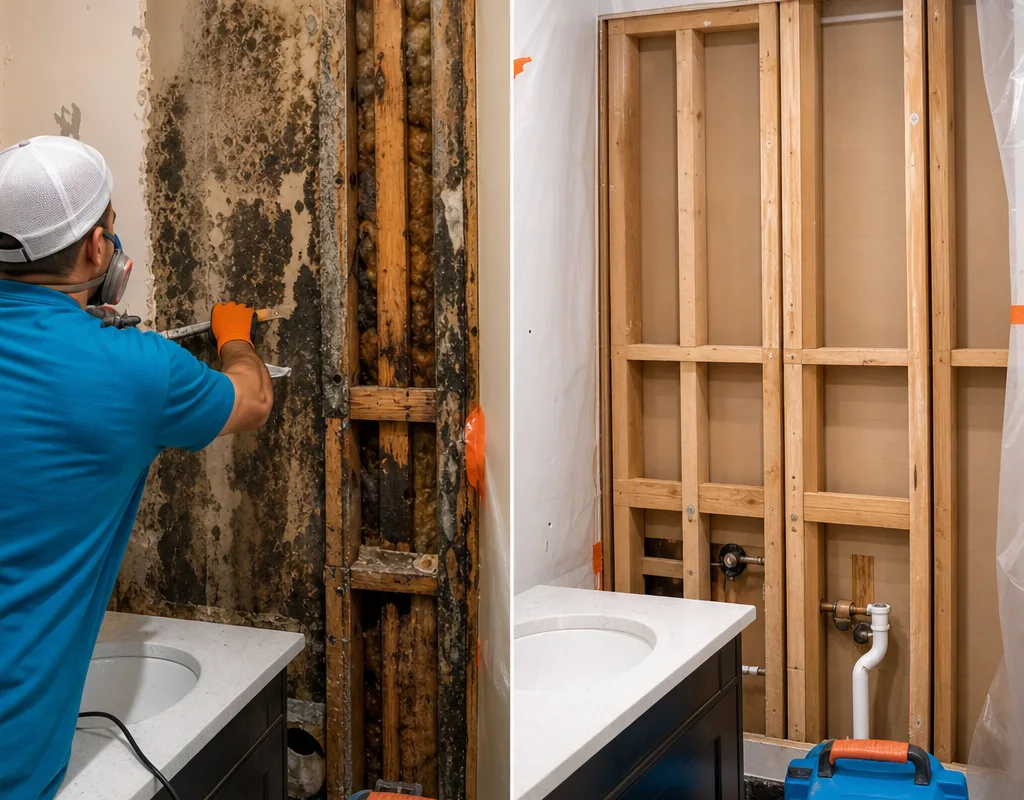
Professional mold remediation is a controlled construction and cleaning process, not a quick spray treatment.
A proper mold removal job typically includes:
Be cautious about jobs that skip containment, rely only on fogging, or treat mold like a stain problem. Mold removal in Roseville CA should be written as a scope that explains what is being removed, what is being cleaned, how the area is protected, and what the drying target is before rebuild starts.
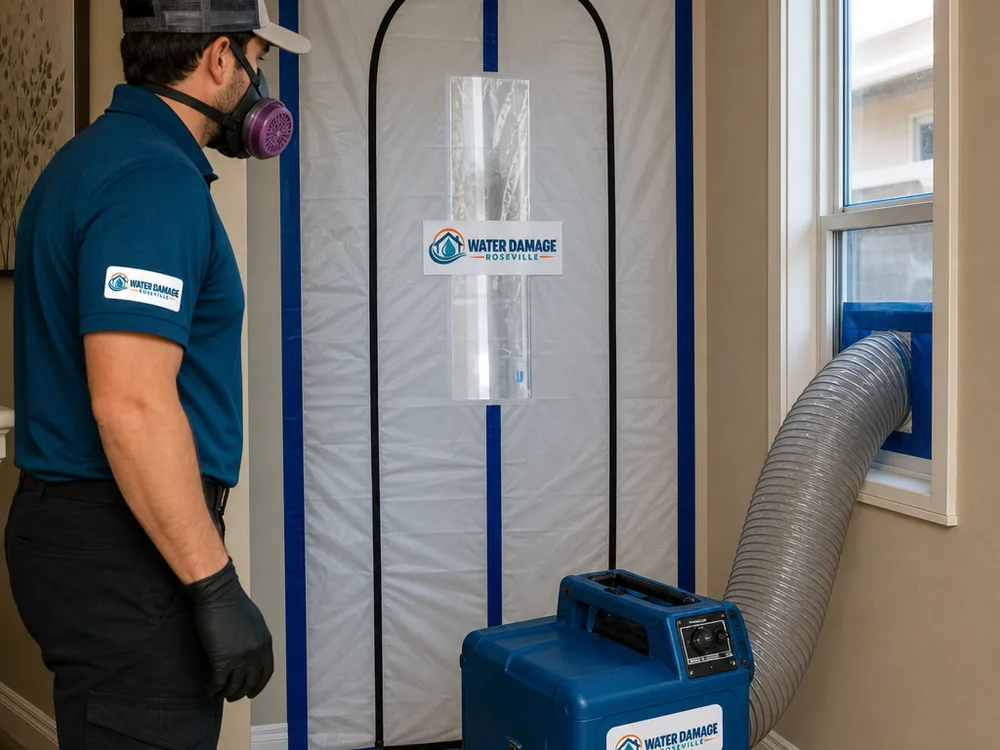
Protect clean areas
Containment keeps disturbed spores and dust from drifting into bedrooms, closets, and HVAC returns while materials are being removed.
Negative air pressure pulls air into the work area and through HEPA filtration, reducing the chance of spread during demolition and cleaning.
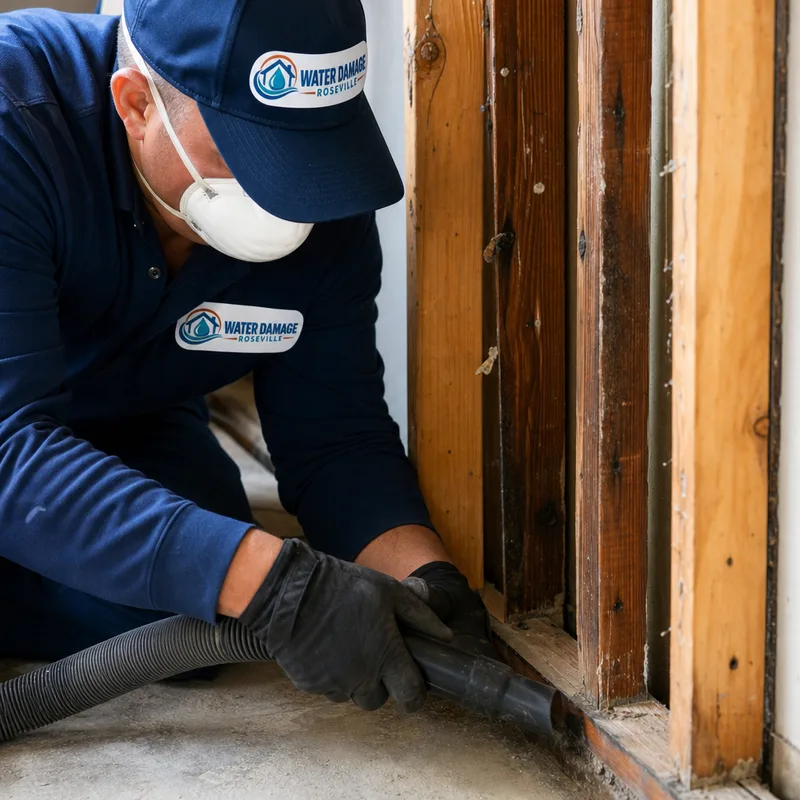
HEPA vacuuming and meticulous surface cleaning do more than kill mold. They remove the particles that cause the odor and irritation.
Remediation should leave surfaces dry and clean so new drywall, flooring, or cabinetry does not get installed over an active problem.
Many Roseville homeowners stay in the house during work. Proper isolation lets the rest of the home remain usable when the scope allows.
Inspection through repair readiness
We identify suspected sources, check adjacent areas that commonly share moisture—behind baseboards, under vanities, and around windows—and outline what needs containment and what needs removal.
We protect floors and pathways, isolate the work zone, and run HEPA air scrubbers. For larger or more sensitive jobs, we establish negative pressure.
When porous materials are affected, we remove them in a controlled way and bag debris before it leaves the containment area.
We HEPA vacuum and wipe structural surfaces, apply appropriate products, and continue dehumidification until moisture readings show the area is dry enough to move forward.
We leave the area ready for repair and talk through what should happen next, whether that is minor patching or a broader rebuild scope based on what was opened up.
Planning your remediation
Mold removal in Roseville typically ranges from about $1,000 to $3,500 for a small to mid-sized, contained area, while larger multi-room remediation with demolition and extended drying often runs $4,000 to $10,000+.
Your actual price depends on how far the mold spread, whether drywall or insulation must be removed, access such as an attic, crawlspace, or tight cabinetry, the level of containment required, and whether drying equipment needs to run for multiple days. The exact cost is confirmed after an on-site inspection and a written scope.
Answers before work begins
Start time depends on the size and whether the situation is urgent, but many projects can begin quickly once an inspection confirms the scope and containment plan. If there is active moisture—a current leak or recent flooding—the first priority is controlling the water source and starting drying, because remediation quality depends on the area getting and staying dry.
If mold is on or inside porous materials like drywall or insulation, removal is often the correct approach because those materials do not clean reliably once colonized. When growth is limited to non-porous or semi-porous surfaces, remediation may focus on detailed cleaning and drying instead, but the decision should be based on what is actually affected behind the finish.
Many homeowners can stay in the home if the affected area can be fully isolated with containment and the work does not involve critical pathways or HVAC contamination. For sensitive occupants or large multi-room projects, it may be more practical to limit access or temporarily relocate away from the work zone until demolition and cleaning are complete.
For professional mold remediation, HEPA air filtration is commonly used, and negative air pressure is added when the scope or risk of spread calls for it. This setup helps capture airborne particles created during removal and cleaning, which is especially important when the affected area connects to living space or shared hallways.
Yes, remediation often includes attics and crawlspaces when moisture issues or ventilation problems lead to growth. These areas can require extra protection for access, careful debris control, and a clear plan for correcting the moisture driver, such as bathroom fan venting issues, roof leaks, or ground moisture management.
Mold returns when moisture returns, so the best prevention is fixing the water source and confirming the area is dry before repairs are closed up. A thorough remediation scope also includes containment to prevent spread, removal of impacted porous materials when needed, and detailed cleaning so residual contamination is not left behind.
Leave the affected area alone, avoid running fans that could move spores through the home, and keep doors to the space closed if possible. If it is safe, take a few photos for your records and clear a small path for access; we will cover and protect floors as part of setup.
Start with a clear assessment
Tell us what you are seeing and where it is happening. We will schedule an inspection, explain what needs containment and removal, and provide a written scope for mold removal in Roseville so you can move forward with confidence.